
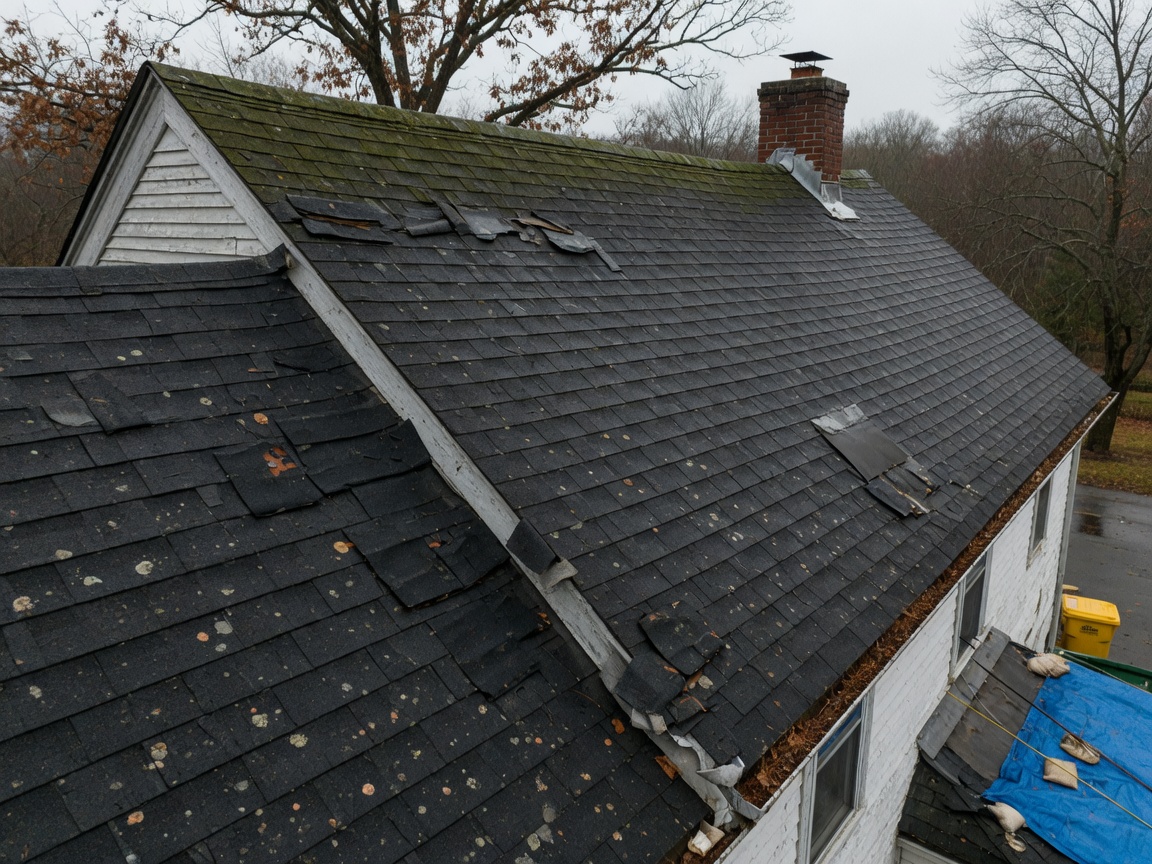
Hudson's housing came out of the shoe and leather mills, and it still shows. The streets running off Main Street and up towards the Assabet are packed with two- and three-family houses and close-set singles built between about 1880 and 1930, with small lots, short setbacks, and — almost universally — something added on the back at some point in the last century. Those rear additions are where Hudson roofs leak, and the reason is almost always the same: the plane is too shallow for asphalt shingles and somebody shingled it anyway.
This is worth being specific about because it is the most common wasted spend we see in town. Asphalt is not rated below 2:12 and needs more than standard coverage below 4:12, and a lot of Hudson rear additions, enclosed porches and mudrooms are at or below that. Water backs up under the courses during driving rain and during every winter thaw. No amount of resealing, no new layer of shingles and no amount of caulk changes the physics. The correct fix is a fully adhered membrane on that one plane, it is usually a modest job, and it permanently ends a leak that people have been chasing for a decade.
Because so much of the stock is rented, a large share of our Hudson work is for landlords, and on those jobs the useful part of the quote is the tenant plan rather than the price. What tenants actually need is a written schedule circulated a week ahead telling them which day affects their unit, whether a car needs moving and when noise starts — not a general notice that work is happening. We put that together as part of the job, because the alternative is a week of phone calls to the landlord about parking.
The rest of the town's stock brings its own patterns. Close spacing downtown means sidewall step flashing between neighbouring structures matters, and staging has to be planned rather than improvised. Chimneys on the older houses go up through the roof plane rather than out a gable end, which makes chimney flashing the second most common leak source. Out at the Lake Boon end, shared with Stow, there are converted summer cottages with the usual conversion problems — no soffit intake, thin insulation at the eaves, and altered roof planes from decades of piecemeal work.
Hudson is about fifteen minutes from us via Route 62 or down through Stow. Replacements need a building permit from the Hudson building department, which we file and coordinate.
Around Hudson, MA
We regularly work near:
- 📍Main Street downtown
- 📍Assabet River Rail Trail
- 📍Assabet River
- 📍Lake Boon
- 📍Hudson Town Hall
- 📍Wood Park
- 📍Danforth Falls
- 📍Washington Street
Roofing Contractor in Hudson, MA — Local Notes
- •Rear additions, porches and mudrooms on Hudson's mill-era housing are frequently shingled at slopes asphalt cannot handle — the single most common source of persistent leaks in town.
- •Membrane on that one plane ends a leak that resealing never will; it is a modest job compared with the years of repairs that usually precede it.
- •A large share of the housing is rented, so a written tenant schedule circulated a week ahead — which day, which car, what time noise starts — is part of doing the job properly.
- •Close spacing downtown makes sidewall step flashing between neighbouring structures important, and means staging and container placement need agreeing in advance.
- •Chimneys on the older stock pass through the roof plane rather than up a gable end, making chimney flashing the second most common leak point.
- •Converted cottages at the Lake Boon end usually have no soffit intake at all, producing ice dams and condensation on the sheathing once the building is heated year-round.